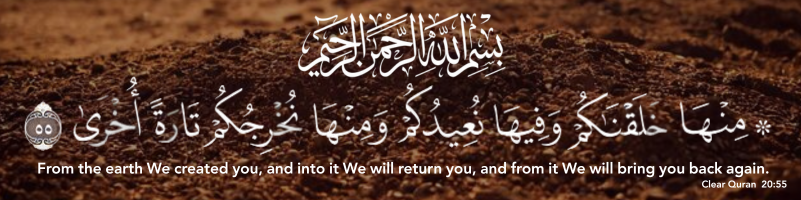
Islamic funeral services reflect the deep respect and reverence that Muslims hold for life and death. According to the teachings of the Qur’an and the Sunnah of Prophet Muhammad (peace be upon him), the deceased is treated with the highest level of dignity, and specific religious guidelines are followed in preparing and burying the body.
These practices are designed to ensure that the process after death is carried out in a respectful and simple manner, emphasizing humility and the understanding that life in this world is temporary, while the afterlife is eternal.
Islamic funerals also play an important social role by supporting and comforting the family of the deceased during a difficult time. They promote unity, compassion, and mutual care within the Muslim community.
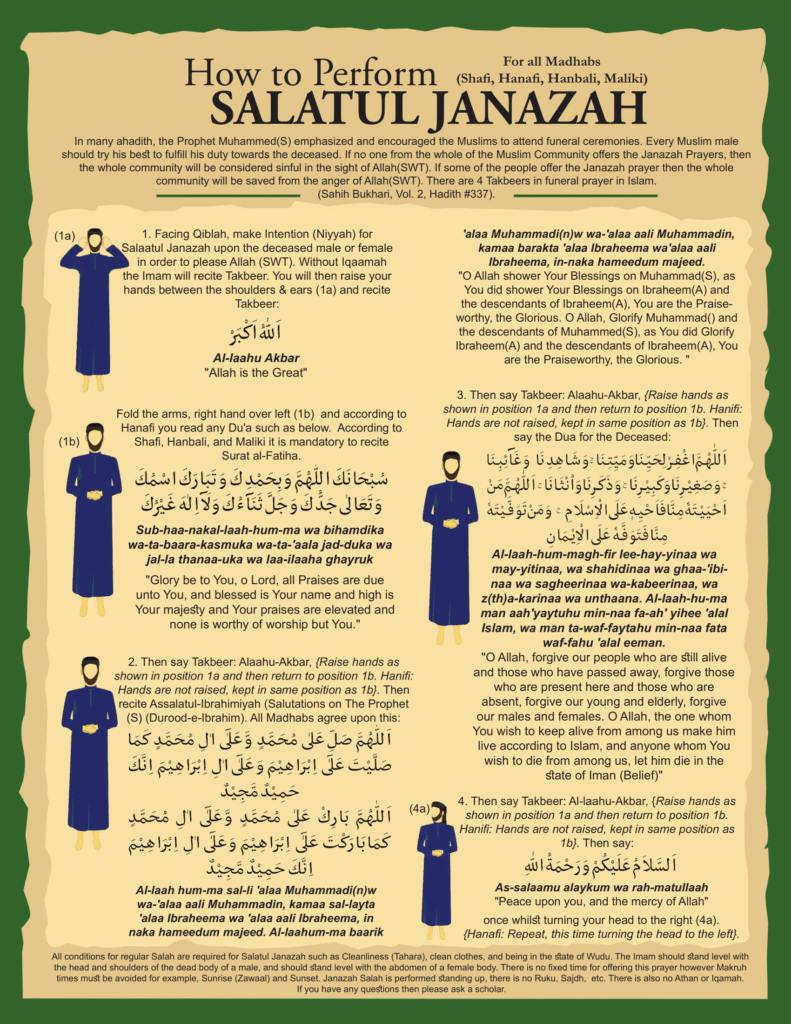
The main procedures typically include washing and shrouding the body according to Islamic law, performing the funeral prayer (Salat al-Janazah), and burying the deceased in a dignified manner that aligns with religious teachings.
Overall, these practices highlight the values of mercy, respect, and spiritual awareness in Islam, while reminding believers of the importance of preparing for the afterlife and honoring human dignity even after death.
Initial Steps to Take Immediately After a Death (May Allah Protect Us All)
Step 1: Immediately After Death
The first thing a person should do upon hearing about death, or once it has been confirmed, is to say:
“Indeed, we belong to Allah, and indeed to Him we shall return”(Inna lillahi wa inna ilayhi raji’un). الَّذِينَ إِذَا أَصَابَتْهُم مُّصِيبَةٌ قَالُوا إِنَّا لِلَّهِ وَإِنَّا إِلَيْهِ رَاجِعُونَ (156) أُولَٰئِكَ عَلَيْهِمْ صَلَوَاتٌ مِّن رَّبِّهِمْ وَرَحْمَةٌ ۖ وَأُولَٰئِكَ هُمُ الْمُهْتَدُونَ (157)
This supplication serves as a reminder that we all belong to Allah and will ultimately return to Him, expressing patience, acceptance of His decree, and hope for His reward and mercy.
Then, If the death occurs in a hospital, hospice, or nursing facility, the staff will guide you through the initial procedures and issue the necessary documentation.
If the death occurs at home, call 911 immediately. Do not move the deceased or begin any funeral arrangements until the authorities provide instructions.
Once death has been confirmed:
Close the eyes of the deceased if possible.
Cover the body respectfully.
Contact family members if known or the local masjid if no known family members.
Make du’a for the deceased.
Avoid unnecessary delays in starting funeral arrangements.
Step 2: Contact a Masjid Funeral Team
Notify a masjid funeral team of your choosing immediately. A few contact numbers are provided at the bottom of this page if any assistance is needed.
Be prepared to provide:
Full name of the deceased
Date of birth
Location of the body
Contact information for the next of kin
Any known funeral or burial wishes
The funeral team will help coordinate the remaining steps and guide you through the Islamic and legal requirements.
Step 3: Obtain Legal Documentation
Several legal documents are required before burial can take place.
These may include:
Death Certificate
Coroner Release (if applicable)
The funeral home and authorities will usually assist with these documents.
Keep multiple certified copies of the death certificate, as they may be needed later for financial, legal, and insurance matters.
Step 4: Arrange Transportation
The deceased must be transported to the funeral home or Islamic washing facility. This step may be provided by the funeral home
Transportation should be coordinated through:
The funeral home
The masjid funeral team
Authorized transportation services
Do not attempt to transport the deceased yourself unless specifically authorized.
Do not attempt to transport the deceased yourself unless specifically authorized.
Step 5: Ghusl (Islamic Washing)
The deceased should be washed according to Islamic guidelines by trained Muslim volunteers or funeral staff.
Important notes:
Men wash men.
Women wash women.
The spouse may assist according to Islamic rulings.
Family members may attend if permitted.
The washing is performed with dignity, respect, and privacy.
Step 6: Kafan (Shrouding)
After Ghusl, the deceased is wrapped in a simple white shroud (Kafan) by the funeral team.
The Kafan symbolizes equality before Allah and reminds us that worldly status and wealth do not accompany us after death.
The funeral team will normally provide the required shroud materials.
Step 7: Schedule the Janazah Prayer
The masjid will announce the Janazah prayer on your behalf once the required information provided.
Information typically provided includes:
Date
Time
Location
Burial arrangements
Friends, relatives, and community members are encouraged to attend and make du’a for the deceased.
The Prophet Muhammad ﷺ encouraged Muslims to participate in Janazah prayers and funeral processions.
Step 8: Burial Arrangements
Islam encourages burial as soon as reasonably possible.
The burial process usually includes:
Transportation to the cemetery
Graveside du’a
Placement of the deceased into the grave
Covering the grave
Family members may participate according to cemetery regulations.
Step 9: Inform Family and Community
Notify:
Immediate family members
Relatives
Friends
Community members
Consider sharing:
Contact information for the family
Janazah prayer details
Burial information
Donation requests if needed
Step 10: Support the Family (Azaa’)
The family often experiences emotional and practical challenges after a loss.
Community support may include:
Providing meals
Helping with transportation
Childcare assistance
Visiting and offering condolences
Making du’a for the deceased and family
Avoid statements that may unintentionally increase grief. Instead, offer sincere support and prayers.
Step 11: Financial and Administrative Matters
After burial, family members may need to handle:
Bank accounts
Insurance policies
Social Security notifications
Vehicle ownership transfers
Property matters
Utility accounts
Outstanding debts
Seek professional legal advice when necessary.
Step 12: Ongoing Du’a and Charity
The Prophet Muhammad ﷺ taught that certain deeds continue to benefit a person after death.
Family and friends are encouraged to:
Make du’a regularly
Give charity on behalf of the deceased
Support beneficial community projects
Sponsor Islamic education
Distribute Qur’ans
Maintain family ties
May Allah forgive our deceased, grant them mercy, and admit them into Jannatul Firdaus.
Ameen.
Emergency Contact Information
If a death occurs and immediate assistance is needed, please contact:
Masjid Funeral Team
Emergency Services (911)
Family Emergency Contact
Keep these numbers easily accessible for family members and close friends.
For assistance, please contact
Brother Nour American Islamic Institute of AV | Palmdale CA Phone: +1 (661) 992-7552
Please note: This service is provided by an independent Islamic organization and is not operated, managed, endorsed, or controlled by the Islamic Center of Hawthorne. Accordingly, the Islamic Center of Hawthorne assumes NO responsibility or liability for this service, including but not limited to its content, availability, accuracy, or any actions taken in connection with him. Any reliance on this service is at the user’s own risk.
How To Wash & Bury A Muslim Body
How to Pray The Muslim Funeral Prayer (Janazah Prayer)